Boom Years: Merging Urban Grit with Playful Typography
Boom Years Display Font stands out as a distinctive typographic option for designers seeking to combine the raw energy of graffiti with the whimsical charm of cartoon lettering. Developed by 7ntypes, this typeface is more than just a visual novelty—it’s a deliberate fusion of two expressive styles that resonate with contemporary design sensibilities. Whether used in branding, packaging, or apparel, Boom Years offers a fresh alternative to conventional display fonts, especially for those aiming to evoke a sense of urban authenticity with a touch of lightheartedness.
What Sets Boom Years Apart?
At its core, Boom Years is a display font that walks the line between edgy and expressive. It incorporates the uneven, hand-drawn qualities of graffiti while maintaining the readability and charm typically associated with cartoon fonts. This dual influence makes it particularly effective for projects that need to stand out without alienating the audience with overly aggressive or illegible typography.
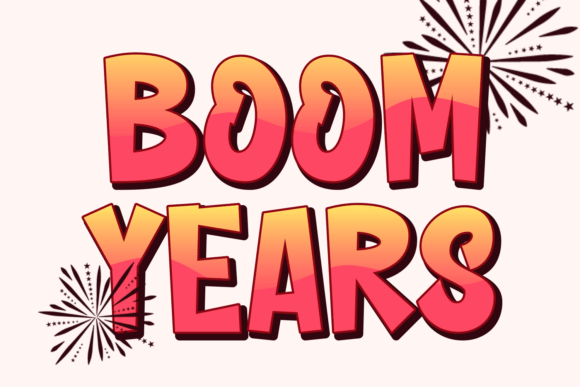
Unlike many cartoon-style fonts that lean heavily into exaggerated curves and bubbly forms, Boom Years retains a certain structural integrity. Its letterforms are bold yet balanced, with subtle irregularities that suggest a hand-painted or spray-painted aesthetic. This gives the font a tactile, almost three-dimensional quality that can enhance both digital and print applications.
Comparing Boom Years with Similar Typography Styles
When evaluating display fonts, it’s helpful to consider how Boom Years stacks up against other popular styles such as graffiti fonts, cartoon fonts, and more stylized script or brush fonts. Each of these categories has its own strengths and ideal use cases.
- Graffiti fonts often emphasize texture, layering, and complexity, making them ideal for designs that aim to reflect street culture authenticity. However, they can sometimes sacrifice readability, especially at smaller sizes.
- Cartoon fonts tend to be rounder, more playful, and easier to read. They work well for family-friendly or humorous content but may lack the edge needed for more mature or urban-themed projects.
- Brush and script fonts offer a more organic, hand-drawn feel but often lack the boldness and impact that Boom Years delivers.
Boom Years effectively bridges the gap between these styles. It brings the visual punch of graffiti without compromising legibility and integrates the charm of cartoon lettering without feeling overly juvenile. This makes it a versatile option for designers who want to appeal to a broad audience while maintaining a strong visual identity.
Strengths and Limitations of Boom Years
One of the most notable strengths of Boom Years is its ability to command attention without overwhelming a design. It works especially well in applications where visual impact is key, such as:
- Comic book titles and dialogue
- Urban apparel and accessory branding
- Advertising and promotional materials
- Product packaging for lifestyle or youth-oriented brands
The font’s multilingual support further enhances its practicality, making it suitable for international branding efforts. Additionally, its availability in regular weights ensures that it can be used in both digital and print contexts without losing clarity or definition.
However, like any stylized typeface, Boom Years is not without limitations. Its decorative nature means it may not be appropriate for long-form text or formal communications. It’s best used as a headline or accent font rather than a body text solution. Additionally, while its graffiti-inspired design is a strong visual asset, it may not align with every brand’s tone—particularly those aiming for a minimalist or highly polished aesthetic.
Practical Applications and Real-World Examples
Consider a scenario where a designer is developing a new line of streetwear. The brand wants to convey a sense of youthful rebellion and authenticity without veering into overly aggressive territory. In this case, Boom Years could be used for logo design, taglines, and packaging labels to reinforce the brand’s urban identity while keeping the tone accessible and engaging.
Another example is in comic book design. Lettering and title fonts play a crucial role in setting the tone of a publication. Boom Years’ cartoon-style influence makes it a natural fit for humorous or action-packed titles, while its graffiti edge allows it to work well in more serious or stylized narratives.
When compared to a more conventional cartoon font like Comic Sans or a graffiti-heavy font like Urban Decay, Boom Years strikes a more refined balance. It avoids the childish connotations of some cartoon fonts and sidesteps the potential illegibility of denser graffiti styles, making it a more versatile middle ground.
When Boom Years Is the Right Choice
Boom Years is particularly well-suited for:
- Brands targeting a younger, urban demographic
- Designers working on comic books, graphic novels, or animated media
- Packaging and merchandise where a bold, stylized look is desired
- Advertising campaigns that require a strong visual hook
If the goal is to create a memorable, high-impact design that still maintains a sense of playfulness and accessibility, Boom Years is a compelling option.
When Another Option Might Be Better
However, there are situations where Boom Years may not be the best fit. For instance:
- If the design requires a more formal or minimalist tone, a clean sans-serif or serif font would be more appropriate.
- In cases where readability is paramount—such as instructional materials or data-heavy reports—Boom Years may not be suitable due to its stylized letterforms.
- For brands that want to maintain a timeless or classic aesthetic, Boom Years’ urban and contemporary flair may feel out of place.
In these instances, designers might consider alternatives that offer a different visual language or more functional characteristics.
Making an Informed Typography Choice
Selecting the right display font is more than just an aesthetic decision—it’s a strategic one. Typography influences how audiences perceive a brand, message, or product. Boom Years offers a unique combination of urban grit and cartoon charm, making it a standout option for designers who want to inject energy and personality into their work.
Before choosing Boom Years, consider the context, audience, and overall design goals. If the project calls for a bold, expressive font that can bridge the gap between graffiti and cartoon aesthetics, Boom Years is likely a strong contender. However, if clarity, formality, or subtlety is the priority, exploring other typographic styles may be more effective.
In the end, typography is about communication. Boom Years, with its distinctive character and practical versatility, offers a fresh way to engage audiences—especially when the goal is to make a statement that’s both playful and powerful.