Byte Square: A Minimalist Pixel Typeface for Modern Digital Design
Understanding Byte Square
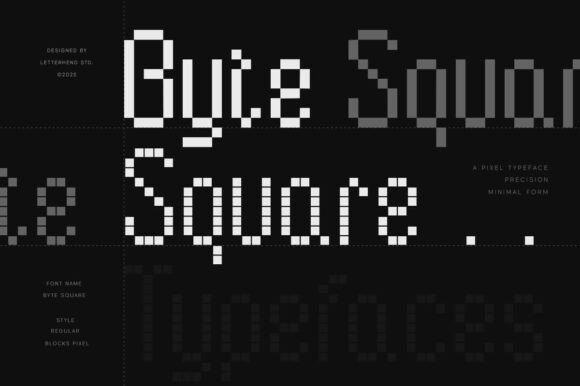
Byte Square is a pixel-based, monospaced typeface designed with a grid-based structure and block-style letterforms. It draws visual inspiration from classic 8-bit displays and early computer typography, while maintaining a clean, contemporary aesthetic. Each character is constructed using uniform pixel blocks, resulting in a crisp, digital appearance that balances nostalgia with modern usability.
Unlike traditional serif or sans-serif fonts, Byte Square embraces a rigid geometric form. This design choice makes it particularly well-suited for projects that require a strong visual identity rooted in digital minimalism. Its PUA encoding also allows for easy access to extended glyphs and alternate characters, making customization more accessible for designers and developers alike.
Why Byte Square Appeals to Designers and Developers
Designers working in digital spaces often seek typefaces that offer both visual distinction and functional clarity. Byte Square stands out due to its retro-futuristic appearance and precise construction. Its blocky, pixelated design evokes a sense of familiarity for audiences who grew up during the early digital era, while still feeling relevant in today’s design landscape.
For developers and UI designers, the font’s monospaced structure ensures consistent alignment and spacing—key considerations in coding environments and interface design. Additionally, its grid-based nature makes it highly legible at smaller sizes, which is essential for technical and game-related applications.
Key Benefits of Using Byte Square
- Visual Identity: The distinctive blocky aesthetic helps establish a strong brand presence, especially for tech or gaming-related projects.
- High Readability: Designed for clarity across resolutions, Byte Square maintains legibility even at small sizes.
- Customization: With PUA encoding, users can easily access alternate characters, glyphs, and swashes for added design flexibility.
- Nostalgic Appeal: Evokes a retro digital feel that resonates with audiences familiar with early computing and gaming visuals.
- Consistent Spacing: As a monospaced font, it ensures uniform character width, which is ideal for code editors and terminal displays.
Considerations and Tradeoffs
While Byte Square offers a unique design language, it may not be suitable for every project. Its rigid, pixel-based appearance can feel limiting in contexts that require fluidity or organic visual styles. Long-form editorial content, for example, may suffer from reduced readability due to the font’s angular structure and lack of traditional kerning.
Additionally, because of its strong stylistic identity, Byte Square may not blend well with more conventional design systems. Designers should carefully consider whether the font aligns with the overall tone and purpose of the project before committing to it.
When Byte Square Excels
Byte Square performs best in digital environments that benefit from a strong, recognizable visual style. Specific use cases include:
- Game Interfaces: Especially retro or indie games aiming to evoke a classic 8-bit aesthetic.
- Tech Branding: Startups, software companies, or product lines that want to emphasize a digital-first identity.
- Coding and Development Tools: UI elements, code editors, or documentation platforms where monospaced fonts are preferred.
- Digital Posters and Event Displays: Projects that aim to combine modern minimalism with nostalgic design cues.
- Merchandise and Logos: Brands looking to create a memorable, blocky visual signature in print and digital formats.
When to Consider Alternatives
While Byte Square is effective in niche design environments, there are situations where alternative fonts may be more appropriate:
- Long-Form Content: For articles, whitepapers, or websites with extensive body text, more traditional sans-serif or serif fonts may offer better readability.
- Corporate or Formal Branding: Brands aiming for a sophisticated or timeless look may find Byte Square too stylized or informal.
- Print-Heavy Projects: Pixel-based fonts can lose definition in print without careful resolution management, making vector-based alternatives more reliable.
- Adaptive Web Design: In highly responsive layouts where font scaling is crucial, more flexible typefaces may provide better performance.
Practical Insights for Decision-Making
When evaluating Byte Square for a project, consider the following factors:
- Target Audience: Does your audience respond to retro digital aesthetics? If your users or customers are familiar with early computing or gaming culture, Byte Square could enhance engagement.
- Use Case: Is your project digital-first, such as a mobile app, game UI, or developer tool? If so, the font’s monospaced and pixel-perfect design can offer practical benefits.
- Brand Identity: Does your brand aim to communicate innovation, minimalism, or a digital edge? Byte Square can reinforce that message visually.
- Technical Constraints: Ensure compatibility with your design tools and platforms. Test the font at various sizes and in different contexts before full implementation.
- Longevity: Will the font remain relevant as your project evolves? While Byte Square has a timeless quality, trends in design can shift, so consider whether it aligns with long-term goals.
Final Thoughts
Byte Square is a well-crafted pixel typeface that bridges the gap between digital minimalism and retro design. Its uniform block construction, monospaced layout, and PUA-encoded customization options make it a compelling choice for specific digital applications. However, its distinctive style also means it’s not universally applicable.
Designers and developers should evaluate Byte Square based on their project’s visual goals, target audience, and technical needs. When used appropriately, it can add a strong, recognizable identity to tech branding, game interfaces, and digital displays. In the right context, Byte Square isn’t just a font—it’s a deliberate design statement.