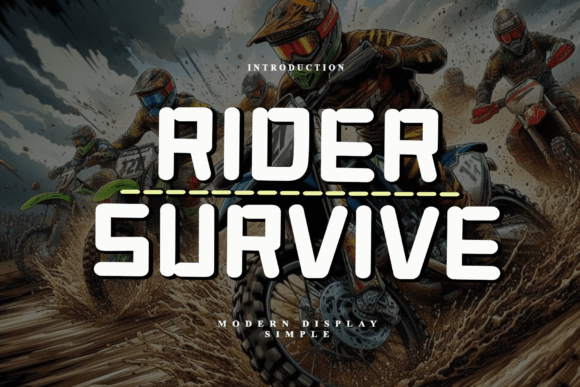
Rider Survive: A Modern Display Font for High-Tech Design Projects
Rider Survive is a contemporary display font that merges futuristic design cues with a streamlined, minimalist structure. Its letterforms are subtly condensed, offering a compact yet highly legible appearance. What sets Rider Survive apart is its distinctive visual language — stylized terminals that curve and taper in unique ways, combined with small circular cutouts that add a touch of mechanical precision. These design elements work together to create a typeface that feels both digital and refined, making it a strong contender for projects that aim to project a sleek, forward-thinking aesthetic.
Key Features That Define Rider Survive
At its core, Rider Survive is built for visual impact without sacrificing clarity. The font’s condensed structure allows for efficient use of space, which is especially valuable in design contexts where screen or print real estate is limited. Its rounded terminals and subtle geometric cutouts contribute to its futuristic appeal, while maintaining a clean and professional tone.
Some of its defining traits include:
- Stylized terminals that enhance its modern character
- Circular cutouts within letterforms for a high-tech visual effect
- Consistent stroke weight that supports readability at various sizes
- Condensed proportions ideal for space-conscious layouts
When Rider Survive Fits Best
Rider Survive excels in design environments that call for a sharp, digital, and professional appearance. It’s particularly well-suited for:
- Tech branding – Logos, app icons, and UI elements that need a futuristic but polished look
- Gaming and sci-fi visuals – Game titles, posters, and promotional materials that benefit from a sleek, high-tech vibe
- Modern headlines – Editorial or marketing headlines that need to stand out without appearing overly ornate
- App interfaces – Digital products where legibility and modernity are key priorities
Its design allows it to function effectively in both small and large applications, though it shines brightest when used at larger sizes where its unique details can be fully appreciated.
Comparing Rider Survive with Similar Fonts
There are several display fonts that share Rider Survive’s futuristic leanings, but few offer the same balance of clarity and design flair. Some alternatives may lean more toward a purely geometric or industrial style, which can sometimes result in a cold or overly technical appearance. Rider Survive manages to avoid this by incorporating soft, rounded features that give it a more approachable quality without compromising its modern edge.
Compared to other high-tech fonts, Rider Survive strikes a middle ground between bold statement-making typefaces and more restrained, minimalist options. It’s more distinctive than standard sans-serif display fonts but avoids the visual clutter that can come with overly stylized alternatives.
Strengths and Tradeoffs
Like any typeface, Rider Survive has its advantages and limitations. Understanding these can help designers determine whether it’s the right fit for a given project.
Strengths
- Distinctive high-tech appearance
- Excellent legibility despite its stylized design
- Effective in both digital and print formats
- Well-suited for branding and UI applications
Potential Limitations
- May not be ideal for long-form body text due to its condensed structure
- Its futuristic aesthetic may not align with all brand identities
- Less traditional appeal compared to classic sans-serif fonts
Realistic Use Cases and Design Applications
In practice, Rider Survive works best when used intentionally within a broader design system. For example, in a tech startup’s branding package, it might be used for app navigation menus or digital banners where a clean, modern tone is needed. In a sci-fi movie poster, it could serve as the title font, drawing attention while reinforcing the futuristic theme.
It’s also effective in mobile app design, where clarity and visual consistency are crucial. Its condensed nature allows for compact buttons and interface elements without sacrificing readability, making it a practical choice for designers who want a modern typeface that performs well in functional contexts.
When to Consider Alternatives
While Rider Survive offers a compelling design, it’s not a one-size-fits-all solution. Designers working on projects that require a more classical or minimalist aesthetic may find it too stylized. Similarly, if the goal is to evoke warmth or organic simplicity, a more neutral or humanist typeface might be a better fit.
Additionally, for extended reading experiences such as long-form articles or academic publications, Rider Survive’s condensed and stylized form may not provide the optimal reading experience. In those cases, serif or more open-sans alternatives would likely offer better legibility over extended text blocks.
Making an Informed Design Decision
Choosing a display font like Rider Survive requires balancing visual appeal with functional performance. It’s important to consider not only the aesthetic qualities of the font but also how well it aligns with the overall design goals and user experience.
Designers should ask themselves:
- Does the font support the brand’s personality and message?
- Is it legible across different sizes and platforms?
- Does it complement or clash with other design elements?
- Will it perform well in both static and interactive contexts?
Rider Survive is a strong option for those seeking a modern, high-tech display font that remains readable and professional. However, like any design choice, it should be evaluated in the context of the specific project’s needs and audience expectations.